Custom AI architecture: agents, RAG, MCP
From idea to deployment: I design the AI architecture that fits your processes — autonomous agents, document RAG, MCP connections to your tools, fine-tuning or low-code — with no vendor lock-in. French expertise, delivered internationally.
Platforms and methods mastered
 ChatGPT / OpenAI
 Claude · Code · Cowork
 Gemini
 Mistral AI
 Perplexity
 Hugging Face
 MCP
MCP OpenClaw
 Make
Make Airtable
How does an AI architecture project run?
- Free scoping
The process to automate, the tools in place, the available data, the expected gain. An honest verdict: low-code is enough, an agent is needed, or AI is pointless here.
- Architecture design
Choice of model (Claude, GPT, Gemini, Mistral, open source via Hugging Face), data-access mechanism (RAG, MCP), autonomy level and platform. Running costs quantified.
- Prototype on a real case
A working version tested by your teams on real data, before any commitment to full deployment.
- Deployment and handover
Production rollout, documentation, training of users and the internal champion. You stay owner and autonomous.
A process to automate? Describe it — I'll tell you what it takes technically.
Scope my projectWhat is an enterprise AI architecture?
An AI architecture is the set of technical choices that determine whether your solution will still work in two years: which language model, which access to your data, which level of autonomy, which execution platform, which security, which reversibility. These choices drive 80% of an AI solution's total cost — and they are almost always made by default, that is, by the vendor who has something to sell.
The market is shifting fast: according to Gartner, fewer than 5% of enterprise applications embedded AI agents in 2025, a share expected to reach 40% by the end of 2026. Companies that structure their architecture now build a durable lead; those that pile up subscriptions accumulate technical debt.
AI agent, RAG, MCP, fine-tuning: what should you choose?
The right mechanism depends on the process, not the trend. In short:
| Need | Mechanism | Concrete example |
|---|---|---|
| Answer from your documents | RAG (Retrieval-Augmented Generation) | An assistant that answers staff questions from your internal procedures. |
| Connect AI to your business tools | MCP (Model Context Protocol) | Claude reads and updates your CRM, calendar and quotes in a standardised way. |
| Run a complete process autonomously | AI agent | Handling exhibitor applications for a trade fair: sorting, replies, follow-ups, invoicing. |
| Specialise a model on your vocabulary | Fine-tuning | A model trained on your technical reports to mirror your formats and terminology. |
| Automate without development | Low-code (Make, Airtable) | Invoice received by email → extraction → accounting entry → archiving. |
Most SME projects combine two or three of these building blocks. The classic mistake is paying for an autonomous agent where three Make scenarios would do — or the reverse.
Why does technical independence matter so much?
I am tied to no vendor: recommendations are arbitrated on your costs and your reversibility, not on a resale margin. That includes open-source models (via Hugging Face, or OpenClaw for self-hosted personal assistants) when data confidentiality demands it. For the build, two options: I steer your existing vendor, or the solution is delivered through NOIA NOGAIN, the custom AI agent practice for SMEs that I co-founded — in which case the scoping remains contractually separate to preserve the independence of the audit.
How much does a custom AI solution cost?
Initial scoping is free. Then the order of magnitude depends on the building block: a low-code automation is measured in days of work; a document RAG assistant in one to three weeks; an autonomous agent connected to several business tools in several weeks, prototype included. Every quote is a fixed fee and includes the estimated monthly running costs (API consumption, hosting), always quantified before launch — that is precisely what the architecture is for.
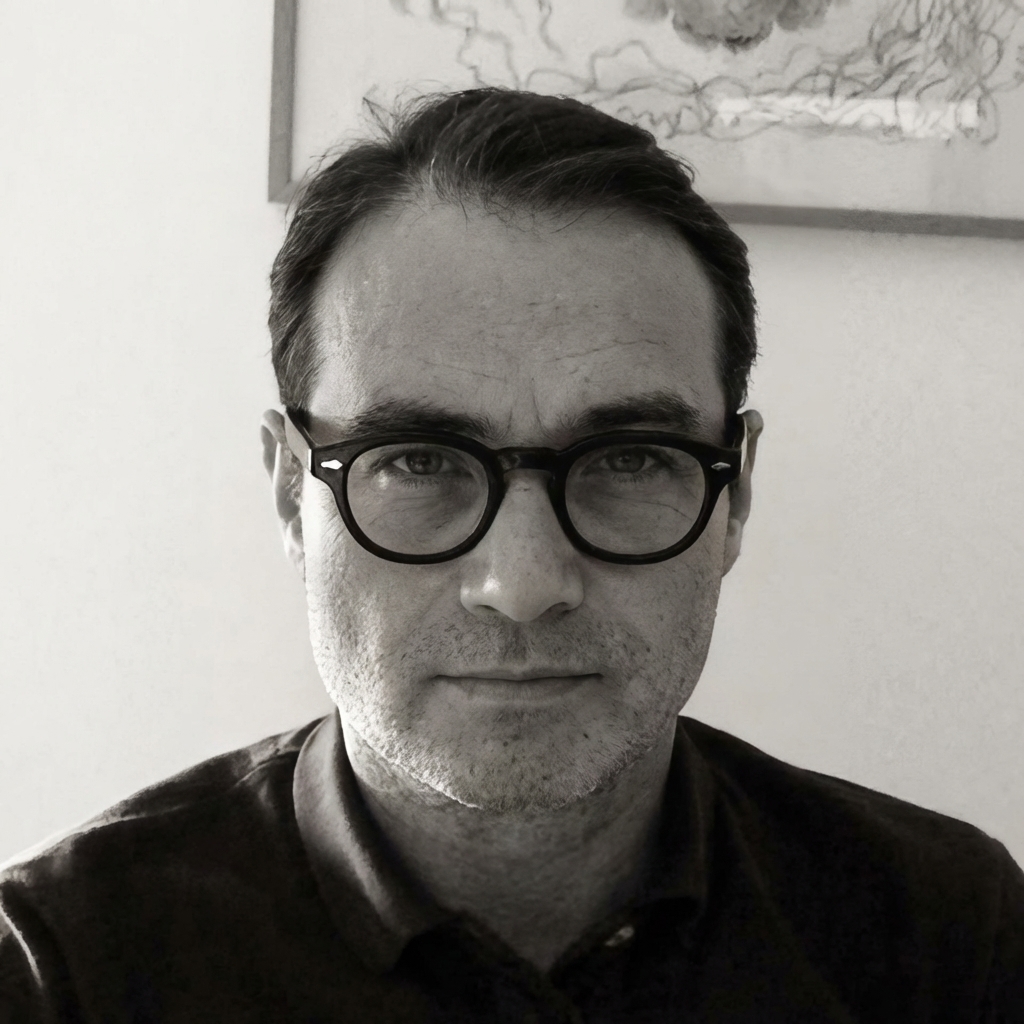
Jérôme Denis — Senior AI consultant, based in France, working internationally (Dubai, Flanders). Twenty years leading digital innovation projects, expert with Collège Numérique France 2030, co-founder of NOIA NOGAIN. AI agents designed and deployed in production for industrial and services SMEs.
Frequently asked questions
What is an enterprise AI architecture?
It is the set of technical choices that make an AI solution work durably: which model (GPT, Claude, Gemini, Mistral), which mechanism to access your data (RAG, MCP), which level of autonomy (assistant, agent), which platforms (API, low-code), which security and which reversibility. A good architecture avoids vendor lock-in and hidden costs.
AI agent, RAG, MCP: what are the differences?
RAG lets a model answer from your documents. MCP (Model Context Protocol) connects a model to your tools (CRM, ERP, email) in a standardised way. An AI agent combines both and acts autonomously on complete tasks. The right choice depends on the process to automate, not on the latest trend.
Do you build the solution or only the architecture?
Both are possible. I design the architecture and can deliver the build, notably through NOIA NOGAIN, the custom AI agent practice I co-founded, or steer your existing vendor while guaranteeing the independence of the technical choices.
What budget should we plan for a custom AI solution?
Initial scoping is free. A simple low-code automation is measured in days; an autonomous agent connected to your tools in weeks. Every project gets a fixed-fee quote after scoping, including running costs (API, hosting) so there are no surprises.
Your next automated process starts with a free scoping call.
Describe my project